


Skip to Content

He Arjuna

CHAPTER I — HE ARJUNA
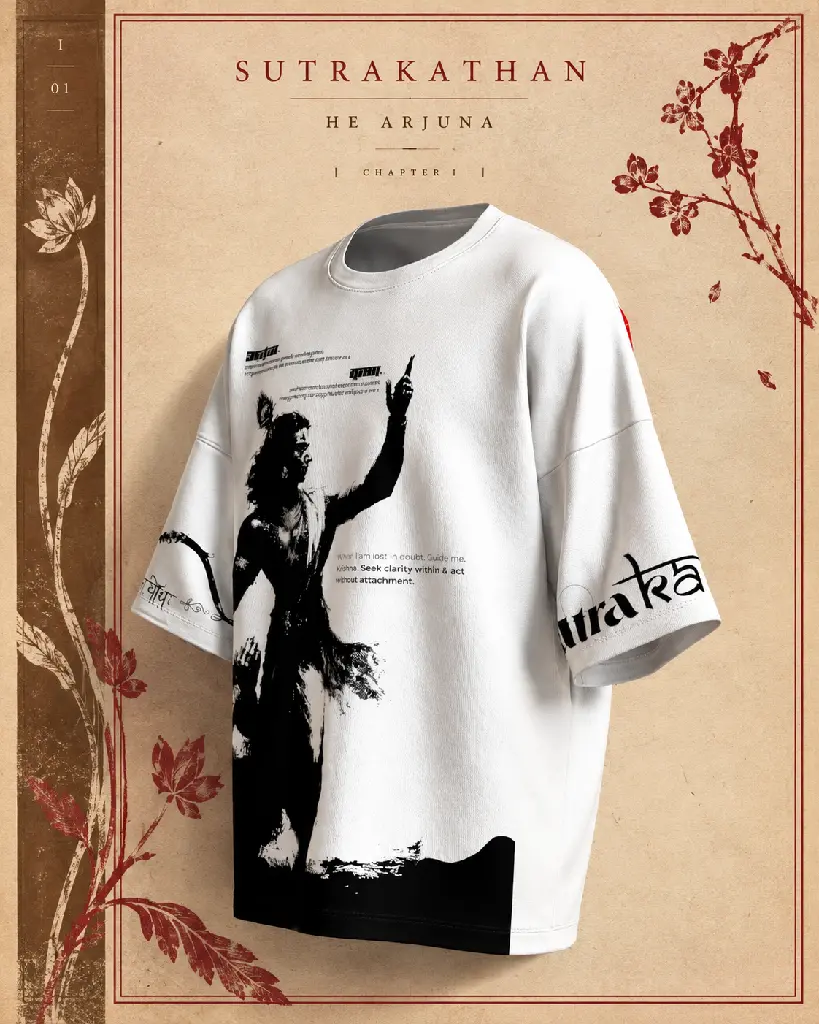
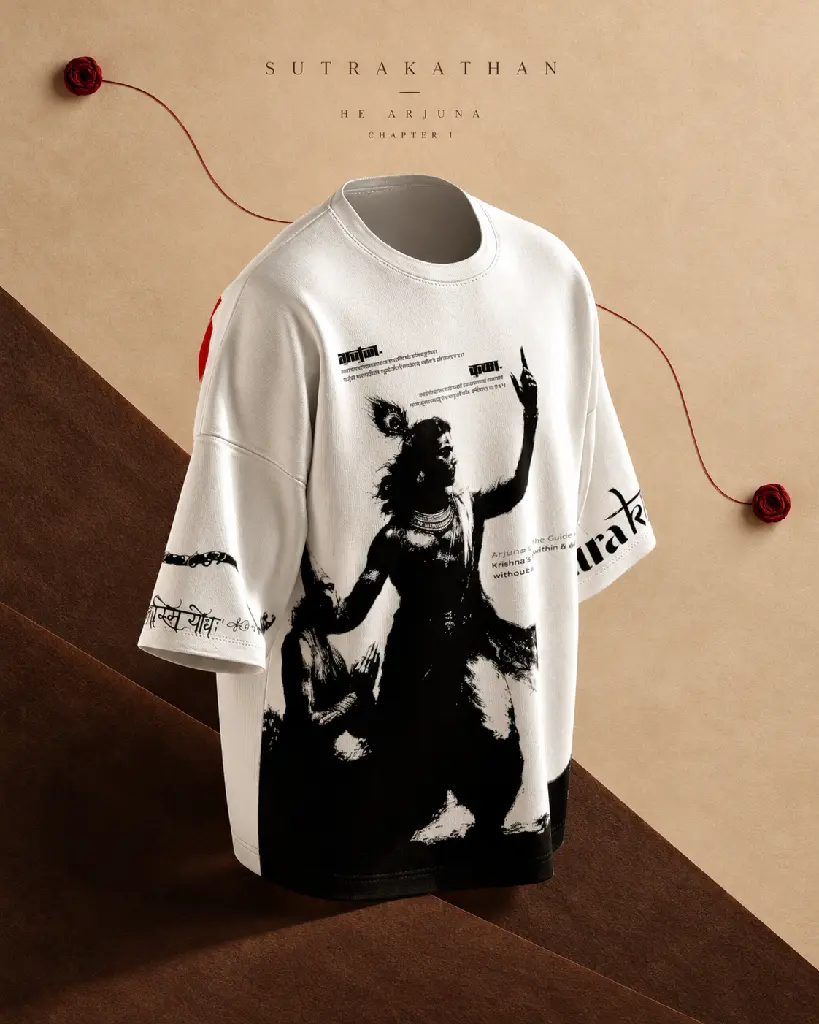
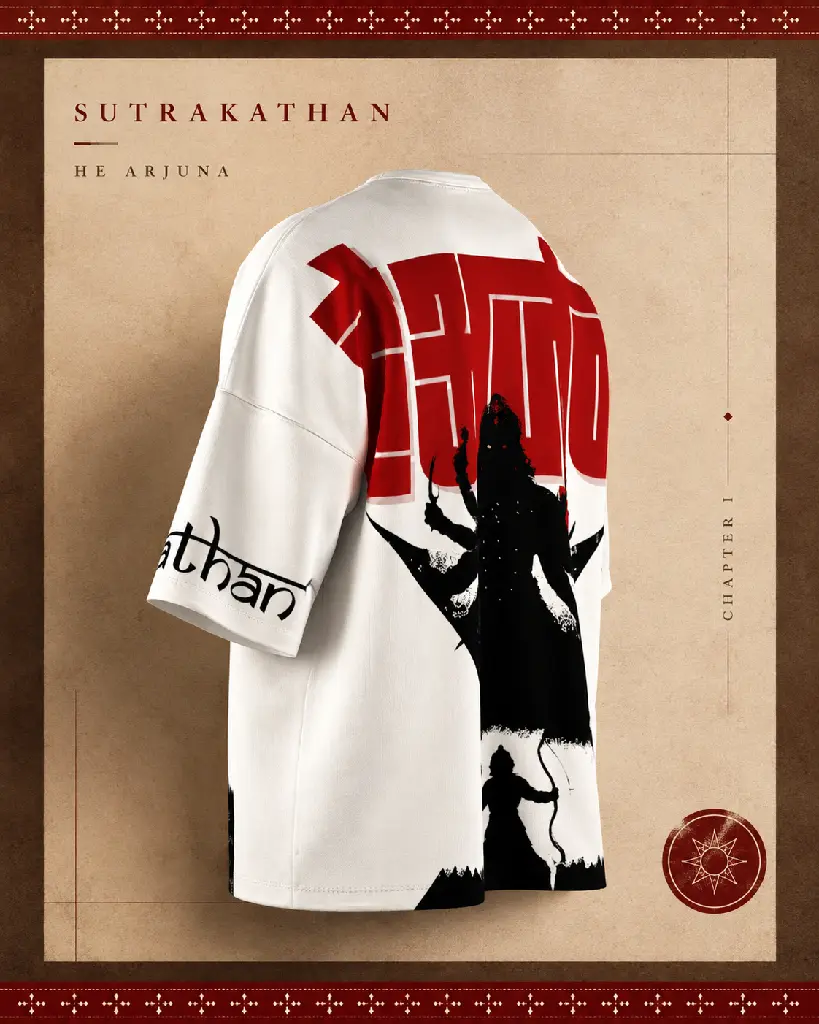
The pause before action. Dramatic black figures and striking red lettering unfold across a white canvas, inviting a closer look at doubt, guidance and clarity.
Turn the garment to discover the second composition. Available in S, M, L, XL and XXL.

PRE-ORDER — Limited stock. Shipping begins 14 November 2026, our official launch date. Free shipping. 14-day returns.
₹ 1,799.00 ₹ 1,799.00
  • Size
PRE-ORDER · Limited stock · Shipping begins 14 November 2026 · Free shipping · 14-day returns. For order support, call +91 98985 08833.

Oversized silhouette · 240 GSM

Size & fit help

Choose your size above to see current availability. For garment measurements and help choosing your fit, contact us before ordering.

Call +91 98985 08833
Delivery & returns

Pre-orders are open while stock lasts. Free shipping. Dispatch begins 14 November 2026, our official launch date. Delivery timing depends on your destination after dispatch. Request returns within 14 days of delivery. Contact us with your order number for instructions.

Read shipping and returns

OVERSIZED FIT · 240 GSM

Size help

For chest and length measurements before you choose, contact Sutrakathan or call +91 98985 08833.
SUTRAKATHAN / CHAPTER I

He Arjuna

हे अर्जुन

What if the hardest part
is knowing what is right?

For the moments when your heart, your fears, and your responsibilities pull in different directions.

HE ARJUNA — The story you carry.

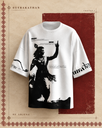
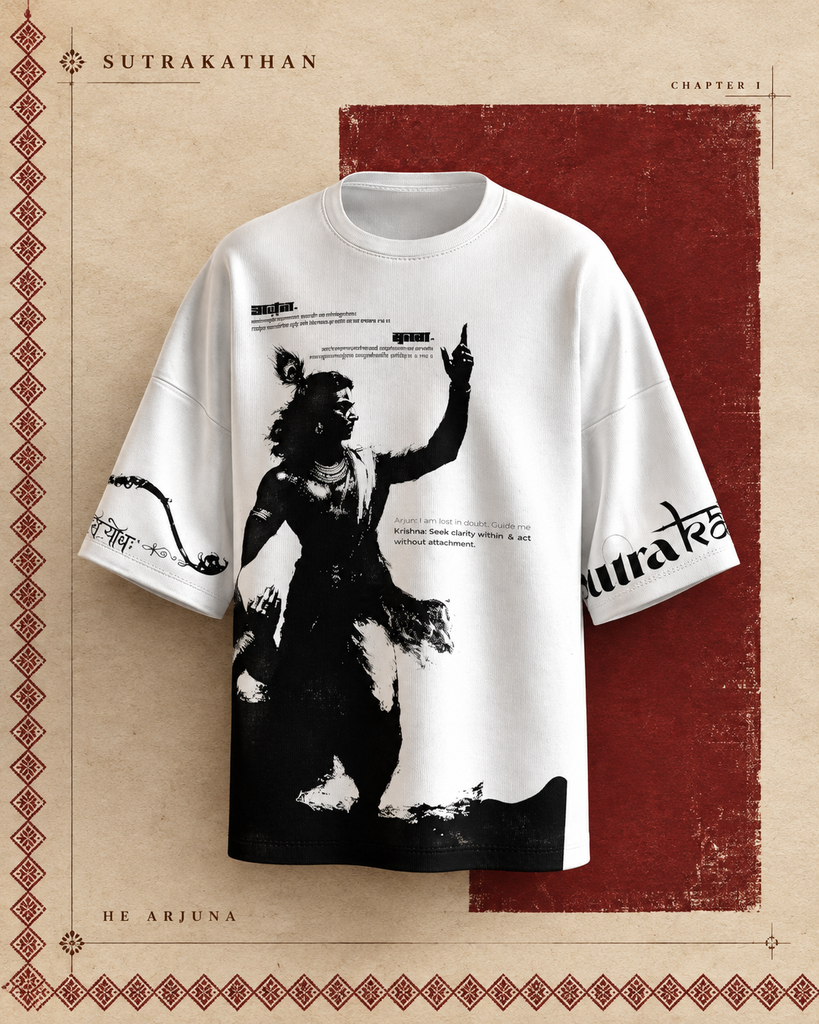
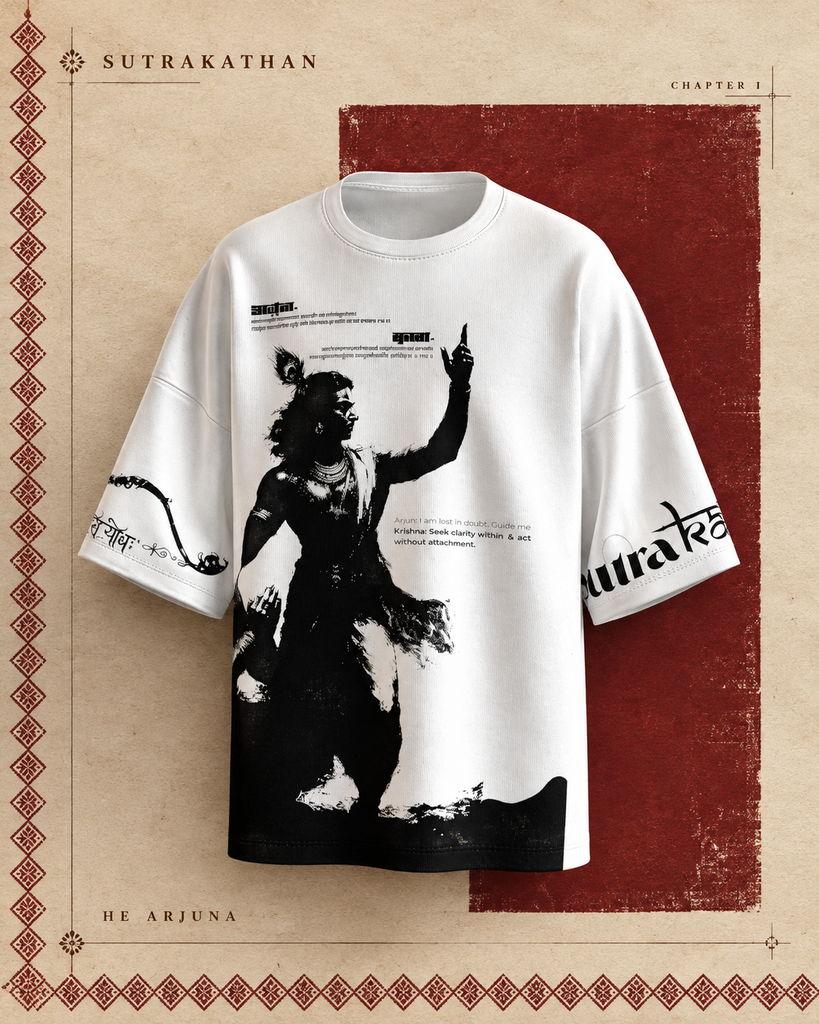
He Arjuna white oversized graphic T-shirt, front view.

THE STORY. THE T-SHIRT.Oversized silhouette · 240 GSM
Discover the garment ↗

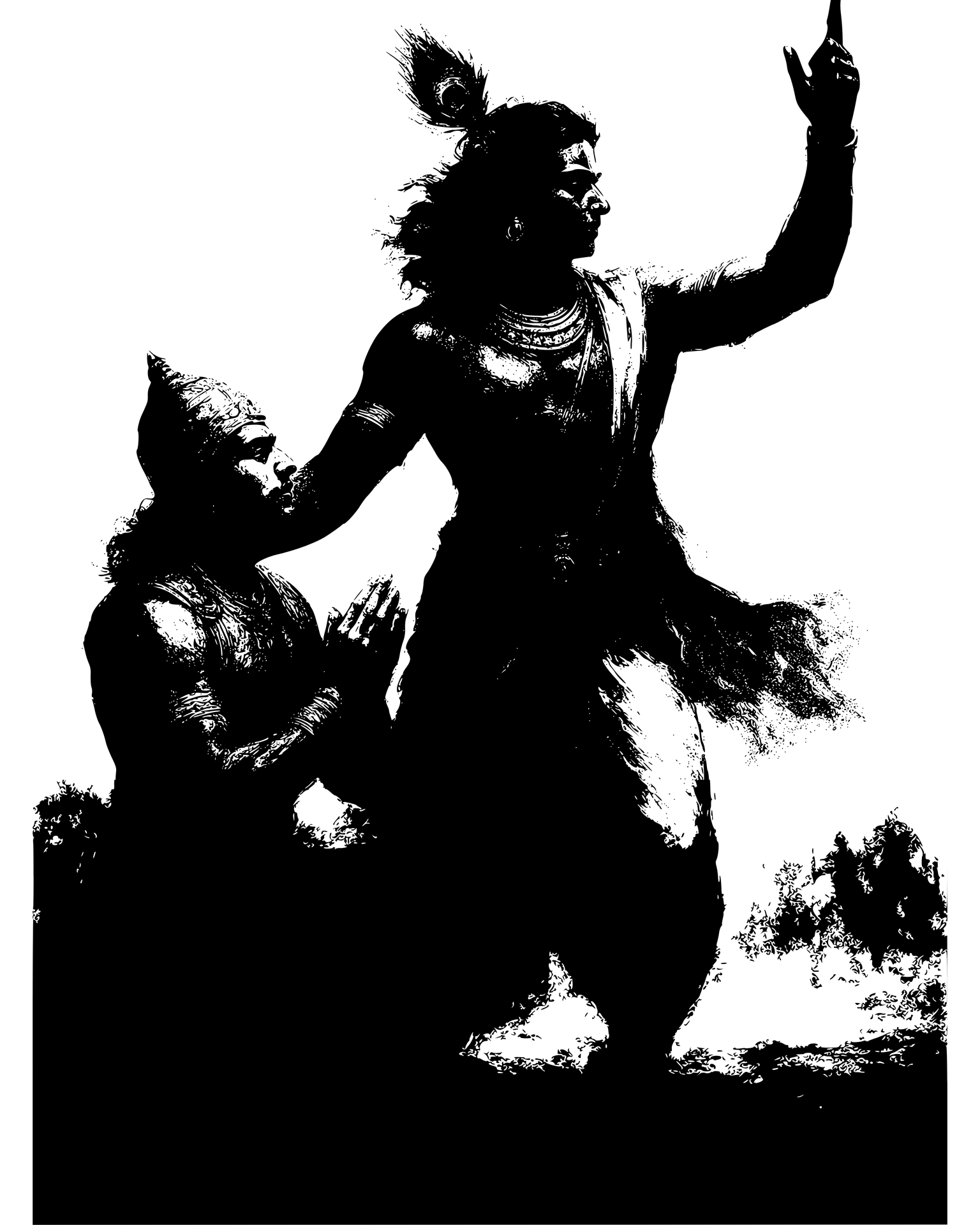
Original He Arjuna print artwork: Arjuna kneels beside Krishna, who raises his hand while speaking. Both figures remain visible in distressed black ink.
Krishna & Arjuna · Original artwork from the garment.

01 / The recognition · Original editorial reflection

You can love someone
and still disagree with them.

You can prepare for years
and still feel unready.

You can understand your responsibility
and still wish the choice were easier.

Arjuna’s story begins in that uncertainty.

02 / The story · Three moments that matter

The Bhagavad Gita unfolds within the Mahabharata, on the battlefield of Kurukshetra. A moral and spiritual crisis comes before action.

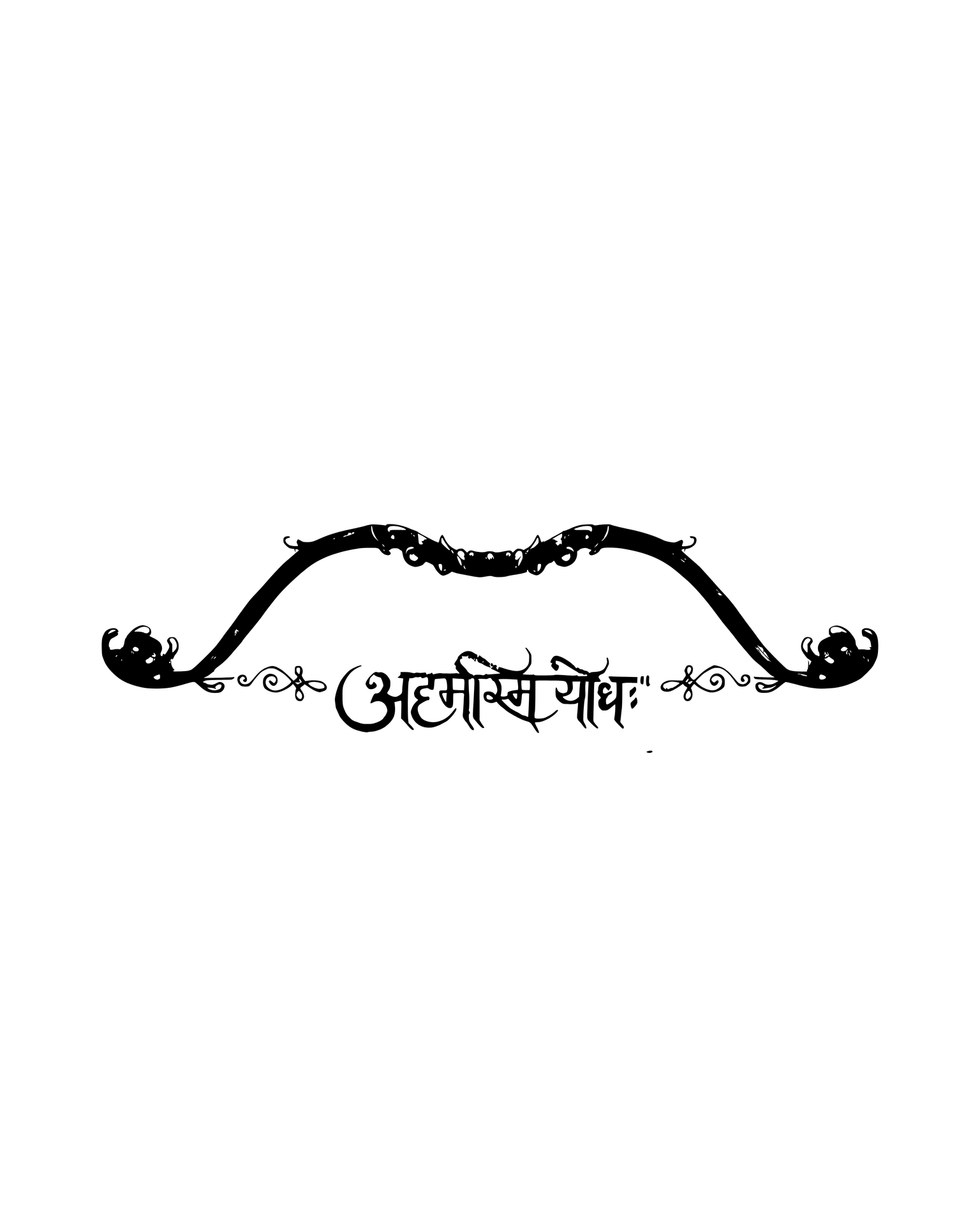
The ornate bow motif from the He Arjuna sleeve artwork.
THE BOW · An original detail from the garment.
I

He saw people
he loved.

Across the assembled armies, Arjuna recognised family, elders, teachers and friends. The people before him were bound to his own life. He questioned what good victory could bring if it required their deaths.

Read the battlefield context

In the epic, this is a war between the Pandavas and Kauravas. Arjuna’s objection is moral as well as personal: he fears the destruction of kin and its consequences. Overcome by sorrow, he sets aside his bow and arrows and sits in the chariot.

Gita 1.26–31 · 1.47

II

He admitted
he did not know.

Arjuna does not disguise his uncertainty. Confused about dharma—what is right and what his duty requires—he asks Krishna for guidance. He becomes a student before he becomes ready to act.

Read the request for guidance

In 2.7, Arjuna asks for a definite account of what is truly good and places himself under Krishna’s instruction. Our reading finds honesty in that admission. The verse itself is a disciple’s appeal within a profound moral and spiritual crisis.

Bhagavad Gita 2.7

Original He Arjuna print artwork: Arjuna kneels beside Krishna, who raises his hand while speaking. Both figures remain visible in distressed black ink.
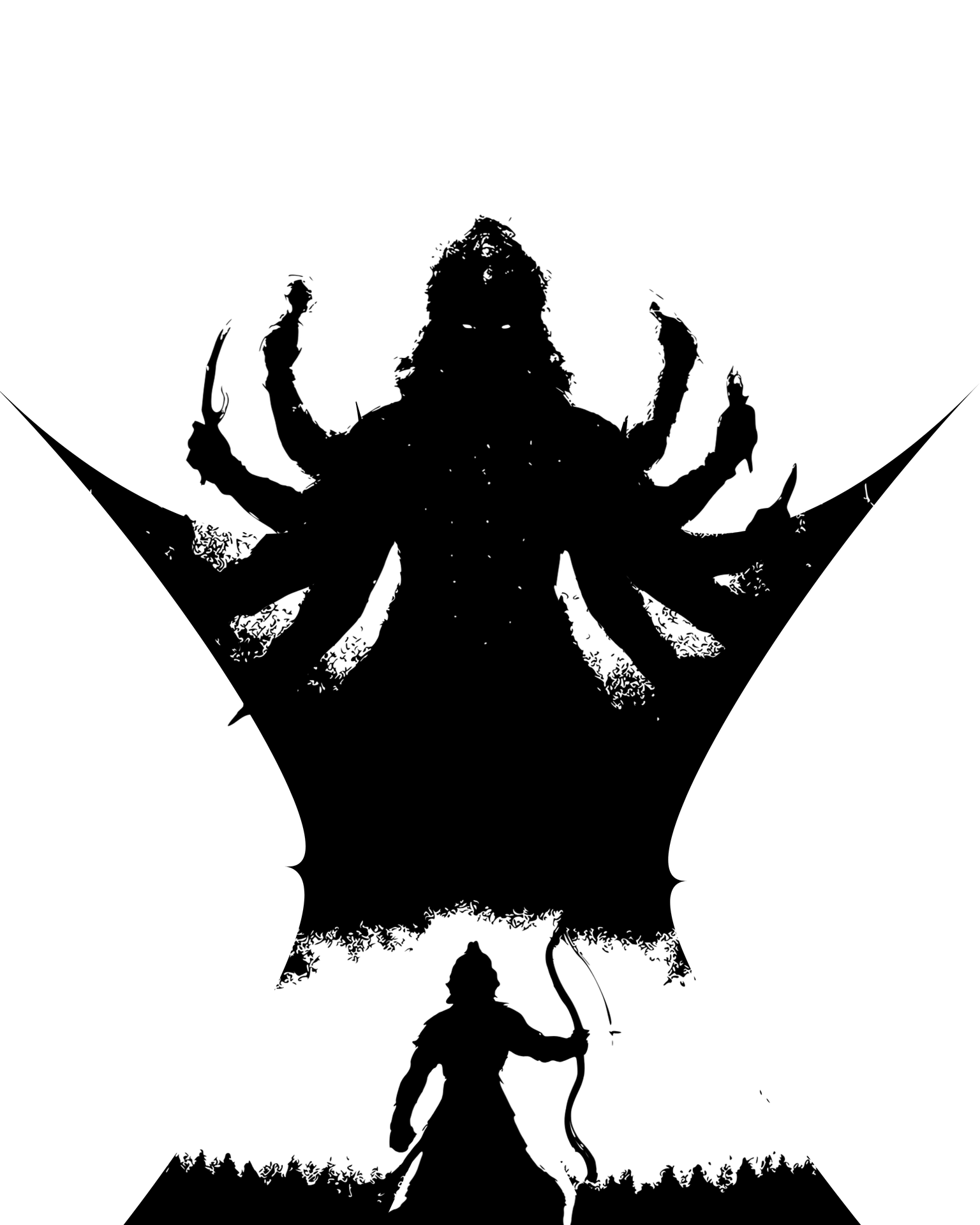
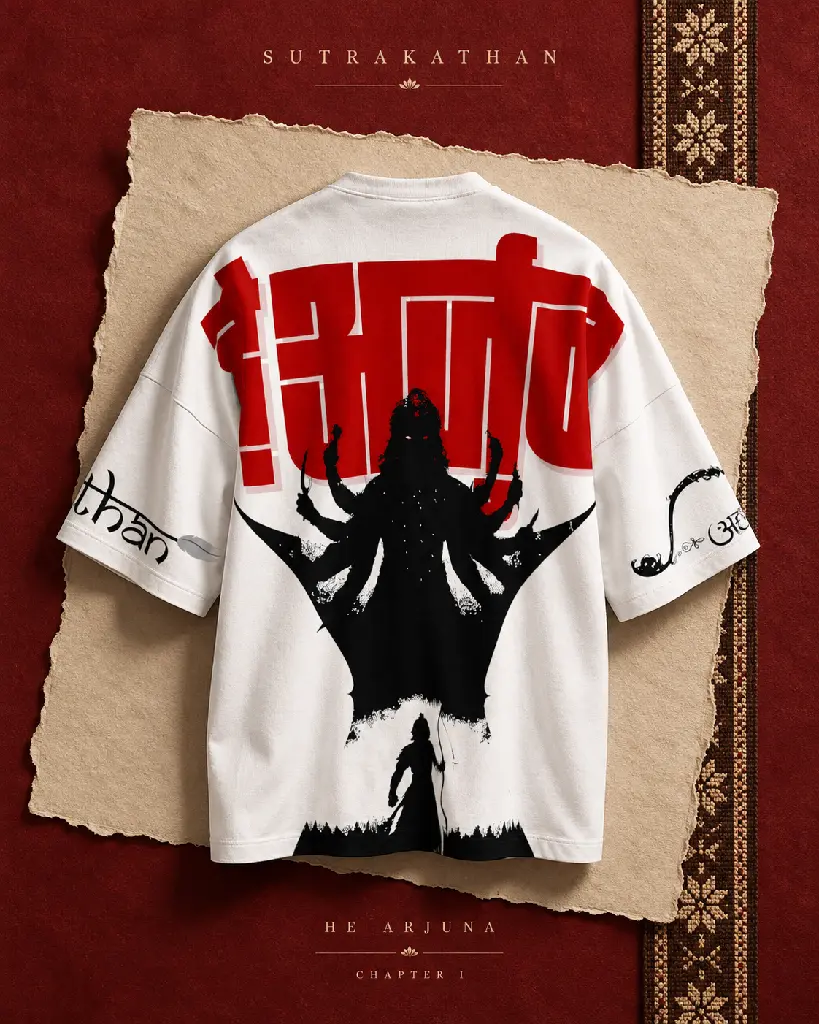
Original reverse artwork: a small archer looks toward a larger, many-armed figure in a dramatic black composition.
FROM THE REVERSE ARTWORK
III

He listened,
reflected,
and chose.

Krishna’s answer unfolds through teachings on the Self, disciplined action, knowledge and devotion. Near the close, he asks Arjuna to reflect fully. Arjuna says his confusion has cleared through Krishna’s grace, and resolves to act according to the guidance he has received.

Read beyond the moment

The conversation does not offer a simple technique for getting what one wants. It asks how a person should understand the Self, action, devotion and responsibility.

In the epic, Arjuna’s renewed resolve means returning to battle. The everyday reflections on this page are a contemporary response to that story, not an equation between ordinary disagreements and warfare.

Bhagavad Gita 18.63 · 18.73

03 / The conversation

Before he could act,
he asked.

Look closely. Two figures, two voices—and a question that opens a conversation.

Original He Arjuna print artwork: Arjuna kneels beside Krishna, who raises his hand while speaking. Both figures remain visible in distressed black ink.
The complete original figure artwork, shown without cropping. The printed verses are presented here as readable text.

ARJUNA TO KRISHNA / GITA 2.7

The courage to ask.

कार्पण्यदोषोपहतस्वभावः
पृच्छामि त्वां धर्मसंमूढचेताः।
यच्छ्रेयः स्यान्निश्चितं ब्रूहि तन्मे
शिष्यस्तेऽहं शाधि मां त्वां प्रपन्नम्॥२.७॥

Original English paraphraseOverwhelmed and uncertain about dharma, Arjuna asks Krishna to tell him what is truly good. He offers himself as a disciple and seeks instruction.

Read the Sanskrit and attributed translations

KRISHNA TO ARJUNA / GITA 2.11

A deeper understanding.

श्रीभगवानुवाच
अशोच्यानन्वशोचस्त्वं प्रज्ञावादांश्च भाषसे।
गतासूनगतासूंश्च नानुशोचन्ति पण्डिताः॥२.११॥

Original English paraphraseKrishna challenges Arjuna’s account of grief: he speaks as though wise, yet the truly wise do not grieve in this way for either the living or the dead.

This begins Krishna’s teaching about the enduring Self and the changing body. It belongs to a spiritual argument about life, death, knowledge and duty—not a casual instruction to stop caring or suppress emotion.

Read Gita 2.11 · The Self: 2.20

04 / The message we carry · Original brand reflection

You do not need to have every answer.
You do need the courage to seek clarity—
and the care to act responsibly.

Thoughtful action begins with attention: to what is right, to the people affected, and to the work itself. A desired outcome need not be the only reason to act.

A verse to return to

Action.
Without
fixation.

Bhagavad Gita 2.47
Krishna speaking to Arjuna

कर्मण्येवाधिकारस्ते मा फलेषु कदाचन।
मा कर्मफलहेतुर्भूर्मा ते सङ्गोऽस्त्वकर्मणि॥२.४७॥

Original English paraphrase

Your responsibility is to act, without claiming the fruits as yours. Do not let the reward become your reason for acting, and do not become attached to doing nothing.

Understand this verse

The verse holds action and non-attachment together. Krishna asks Arjuna neither to work only for a desired reward nor to retreat into inaction. The following verse, 2.48, connects this discipline with steadiness in success and failure. This is part of the Gita’s spiritual teaching about yoga, rather than a promise of success.

Non-attachment does not remove the need for judgment: 18.25 criticises action undertaken without regard for consequences, harm, loss or one’s capacity. In our contemporary reflection, seeking clarity includes considering who may be affected and questioning an obligation that would cause harm.

Further context: Bhagavad Gita 2.48 · 18.25

05 / Contemporary reflections inspired by the story

The moment will look different for each of us.

These are invitations to reflect in everyday life. They are original editorial readings, not instructions quoted from scripture.

An honest conversation
you keep postponing.

What needs to be said—and what needs to be understood first? Clarity may ask for listening as much as speaking, with care for the person across from you.

A responsibility whose outcome
you cannot guarantee.

Separate the preparation and care you can offer from the result you hope for. Uncertainty can remain even when you take your responsibility seriously.

A choice between someone’s approval
and your considered conscience.

Pause before either pleasing or defying. Examine your reasons, seek a perspective you trust, and consider what your choice may mean for others.

When your moment comes, remember to pause, seek clarity, and choose with care.

06 / The artwork becomes the garment

A reminder you can wear.

This is the moment our design carries: Arjuna seeking guidance, Krishna responding, and a conversation that continues to invite reflection.

For the days when you need to return to what matters.

Actual He Arjuna front garment render: white oversized T-shirt with Krishna and Arjuna, printed scripture and sleeve graphics.
FRONT / The conversation, Sanskrit passages and black ink figures.
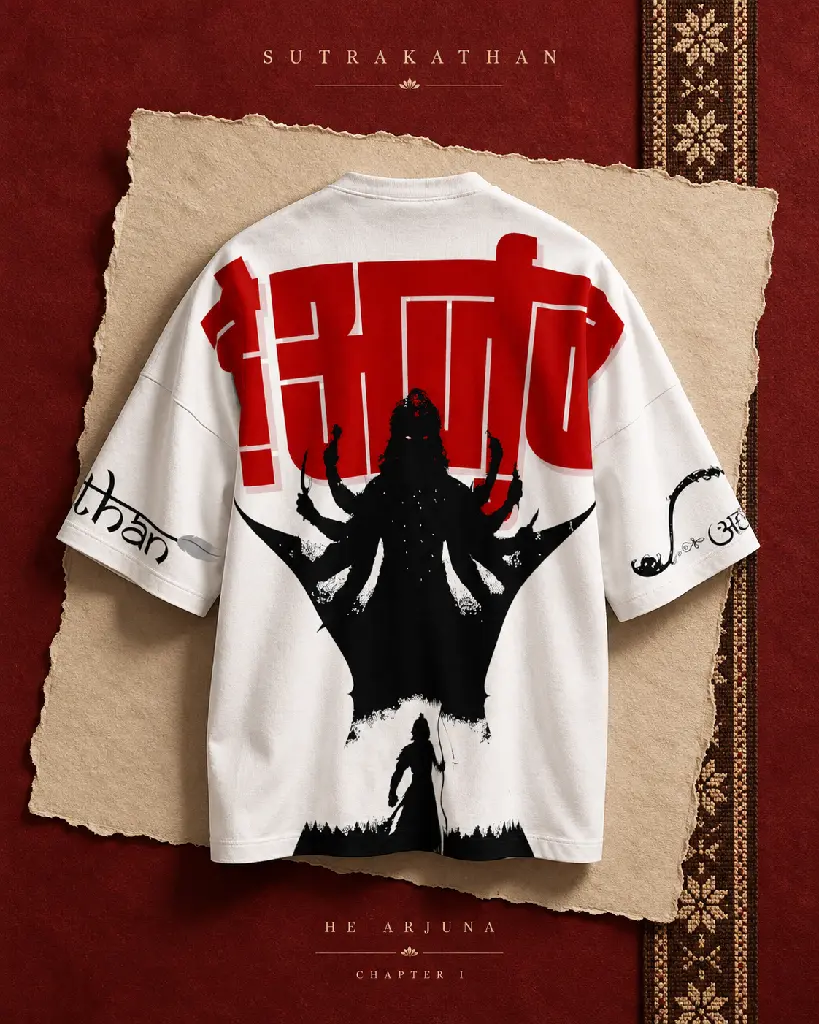
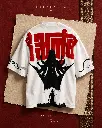
Actual He Arjuna back garment render: white oversized T-shirt, large red Devanagari lettering and black figurative artwork.
BACK / Red lettering and a second black composition. Supplied garment renders.
Sources, scripture and artwork

Principal text: Bhagavad Gita, within the Mahabharata’s Bhishma Parva. Sanskrit and narrative references were checked against IIT Kanpur’s Gita Supersite. Chapter-and-verse references are used because Mahabharata section numbering varies by edition.

The Sanskrit verses are ancient source text. All English explanations, paraphrases and contemporary reflections on this page are original editorial copy, not quotations from modern translations. The printed English dialogue is identified separately as a creative paraphrase. Readers may explore the individually credited translations and differing commentarial traditions at the links below.

Artwork comes from Sutrakathan’s original He Arjuna design files. Garment imagery uses the supplied front and back renders; no model photography or fabricated fabric close-ups have been substituted.

07 / Carry the reminder

Make the story yours.

Choose your size below.
Live price and availability are shown with the product.

When life asks you to act.

Some days, you are certain.
Some days, you are Arjuna.

Carry a reminder to seek clarity.

View the T-shirt
He Arjuna front garment, with the conversation artwork printed on a white oversized T-shirt.
SUTRAKATHAN
Stories woven with threads.
कथाएँ, धागों में बुनी हुईं।

Specifications

Size S, M, L, XL, XXL